After a minor hiatus, Janis Stirna is back with his on-going preview of the Eurovision. The semi-finals start next Tuesday (5/22), and he promised me he’d cover all the entries before the finals along with all his yes/no votes on who will make it to the finals.
Hello my friends.
If You are here today this is meaning You are again with me in following Eurovision songgames! However before I am telling you my yesvotes and novotes and wonderings of European motherland songgames contestants, I first must to be telling you answers to questionings.
Is Janis Latvian? I am. Is Janis making writings hisself? I am! I am writer in motherland Latvia and am enjoying to write and write all the times I have possibilities for to write. But what for to make writings hisself if Janis can be finding translators by Americas, that are plentiful of English knowing peoples?! Or maybe by Chad W. Post, that is plentiful of knowing all peoples?!
My answer is easy. I, Janis, too am writing and knowing of English as well. I am working many years hard for learning English of book and picturefilms—my English is something You are understanding and this is most important thing, so why for should I search of translators? Translatoring is also lasting long days and I am not all the times joyous of outcome. It is also priding for me to be writing at You of my own wordings.
But now is time for more Eurovision songgames writings! I am for to write at You first of semi-finals 1 European motherlands, then of semi-finals 2 motherlands. I will for to make of groupings, yes? There are also click-links for to viewing of picturevideos of musics! Are You excite?! Here we are going!
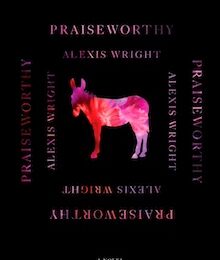
Montenegro: Peoples question at MY English? Singing man is not even singing, but is making rhymings. Rhymings of talking! And why for to burning globe??? IS PERFECTLY GOOD GLOBE!! I am finding donkey friend of singing man with no sense globe burn rhymings finding greatly more interesting than singing man hisself. Sorry, Montenegro, but European motherlands already are having one Italian Jovanotti-type singer—his name is Jovanotti and he is of Italy. Maybe picturevideo of donkey friend only is better idea. I am thinking no songgames finals for Montenegro.
Iceland: Ooh, fancy violin soundings. Song words are of serious times, maybe also sad times. Music is also sounding serious and well, also music is sounds very very familiarity… BUT HEI WAIT. This Jonsi is not Sigur Ros Jonsi. Is Iceland playing trickery? Fancy violin soundings and fancy picturevideos will not be putting sheepswool atop on MY eyes, Iceland, oh no! Not this day!
Greece: HELLO GREEK FRIEND. Oh yes hello. Greece is not having trickeries. Greece is finding most beauteous non-prostitution woman in shortest dress and wind in hair who can sing sexywords on stages made of light and mens with unnatural bendiness of arms and legs. Thank you, Greeceland. Oh yes thank you for not making trickeries. Oh yes. See you at songgames finals, Greece.
Latvia: Look, friends, is my motherland country Latvia! Our woman also is beauteous, but with songwords that make none of the sense. Yet Latvia songgames song is like soundworm in Your ear. A soundworm speaking words of none of the sense. And this worm, he is never leaving your brain and You are thinking and singing all of the times. HEI. Why no one dance in Airport Riga when I am flying? Is extra possibility on ticketings?! AirBaltic, we are to be in contacts soon, and Latvia I am thinking also will be in songgames finals.
Albania: Albania woman is letting her childrens make writings on wall? While she is making standing and song in box? Where to have her feets gone? Though she IS having a voice of strongness and winning, but is filling of sad. OH YES, probably because nobody will be understanding her songwords. Maybe following year, Albania is making songwords in normal languages. And maybe following year Albania also is making it to finals because this year NO. No.
Romania: In what country is Romania picturevideo happening? Is desert, is drummings, is Abu Dhabi, is Scottish bagpipings… She is globetrotting so quickfast! Perhaps she has possibilities for to time travel? Romanian woman singing is much like Spain musics of previous songgames, but with more gyrations of bodies and chest bubbles. And accordion! Perhaps Romania will share time travel secrets and show more of the gyrations when we are seeing her in songgames finals.
So there my friends is first six semi-finals 1 Eurovision songgames explaining by Your friend Janis, me! I will bring you more words of Eurovision soon, but I must now go to trap my train or else be making seering walking to City Center from homehold. Let us hold our thumbs for all songgames contestants (yes also the so silly ones) and see you soon next time for writings.
TweetThe latest addition to our Reviews Section is a piece by Jacob M. Appel on Louis Paul Boon’s My Little War, which is translated from the Dutch by Paul Vincent and available from Dalkey Archive Press.
Jacob M. Appel is a physician in New York City and the author of more than two hundred published short stories. His prose has been short-listed for the Pushcart Prize, Best American Short Stories and the O. Henry Award on multiple occasions. Jacob’s paternal
grandfather, Leo Appel, came to the United States as a refugee from Antwerp, Belgium, in 1938, and Jacob remains deeply engaged in Dutch and Flemish culture. Click here for more information.
Dalkey’s published a few Louis Paul Boon books, including Chapel Road (which is AMAZING) and Summer in Termuren (more amazing). He’s tragically overlooked by American readers, which really sucks, since these two books are on par with pretty much all other mammoth classics of twentieth-century literature. (This sounds hyperbolic, BUT IT’S NOT.)
Here’s the opening of Jacob’s review of My Little War:
The period between Flemish author Louis Paul Boon’s birth in 1912 and the publication of his post-modern masterpiece Mijn kleine oorlog (My Little War) in 1947 saw Belgium ravaged by some of the worst wartime carnage that the European continent had experienced in centuries. Even as Hitler’s advancing wehrmacht sent 25% of the Belgian population fleeing over the French border, memories remained fresh of the brutal German occupation of 1914—including its defining atrocity, the sacking of Leuven, during which the city’s library of 300,000 medieval books was burned and the entire populace expelled. So to post-war Flemish readers, Boon’s peculiarly brilliant novel appeared in the wake of two large wars, challenging a literary orthodoxy that tried to make sense of these conflagrations.
Mijn kleine oorlog is decidedly not an anti-war novel—at least, not in the sense of Remarque’s All Quiet on the Western Front or Zweig’s The Case of Sergeant Grischa or Rolland’s Clérambault, the sort of predecessors to which Boon is likely referring to when he writes to question the archetypal “great writer” who rises up to present the world with “his Book About the Great War—with capital letters.” Instead, the volume might be described as an anti-anti-war novel . . . if it even is a novel at all. A better description yet might be an anti-anti-war sketchbook. For what Boon has done in thirty-three brief vignettes is collect snippets of overheard conversations, press reports, unsubstantiated rumors and “personal” experiences to generate a montage of the highly subjective experience of one ordinary laborer-turned-POW-turned-writer during the Second World War. Yet even the volume’s subjectively is overtly orchestrated; this is not Virginia Woolf or James Joyce trying to capture the subtle workings of the human mind, but rather an author reminding the reader that he is feigning to do so. In one noteworthy example, after referring to multiple characters as “what’s-his-name” and “what’s-her-name,” Boon suddenly pretends to have recalled one of their names: “What’s her name came too,” he writes. “What was her name again the one who was hit in the head with something the other day and died, who used to get so furious and denounce us as pro-German when we said the war would last five years . . . it was Mrs. Lammens!” Of course, the reader recognizes that Boon has not achieved this recollection in the moment. Rather, Boon uses this device to mock his modernist forebears and to remind the reader of his own pretenses.
Click here to read the complete essay.
TweetTwo of my friends have memoirs coming out this spring (the other being Gideon Lewis-Kraus’s A Sense of Direction), which is a sort of interesting phenomenon. I don’t typically read a lot of memoirs, but when it’s someone you know? . . . That’s extra intriguing. I don’t know either Gideon or Wen all that well, yet I know them well enough to know that I really like them and am curious to find out more about their lives, both in the events that shaped them and the way they write and share their take on these events.

So this week, I took a couple nights to get sucked into Wen Huang’s The Little Red Guard, which opens
At the age of ten, I slept next to a coffin that Father had made for Grandma’s seventy-third birthday. He forbade us from calling it a “coffin” and insisted that we refer to it as shou mu, which means something like “longevity wood.” To me, it seemed a strange name for the box in which we’d bury Grandma, but it served a practical purpose. It was less spooky to share my room with a “longevity wood” than with a big black coffin.
It’s through this lens of Wen’s Grandma’s impending death, and all the complications this causes his family, that he provides a picture of what it was like coming-of-age during the years leading up to the Tiananmen Square incident. The basic conflict—as described on the back of the book—is that Grandma insists on being buried next to her dead husband at a time when all burials are outlawed, thus putting Wen’s father (a devout member of the Party) into a really tricky space where he has negotiate his belief in Communism and Mao with his filial duties and love for his mother.
The whole book is really interesting, in part because it adds all new dimensions to my understanding of what makes Wen, Wen, but also because I don’t know all that much about Chinese life during this period. At least not a in a way that is personal, thoughtful, touching, and sincere. (All qualities Wen has as a person are also evident in his writing.)
I don’t want to write a formal review (right now), but I do want to say that this memoir is a wonderful portrait of a family caught in all the various changes that swept through China in the latter half of the twentieth century. All the shifting values, belief systems, etc.—it’s all very fascinating to read about, especially told in such a remarkably earnest fashion.
It’s worth noting that in addition to authoring this book, Wen has translated two books: The Corpse Walker by Liao Yiwu and Women from Shanghai by Xianhui Yang. Through all of these books—and his writings for Publishing Perspectives—Wen is doing a lot to bring Chinese perspectives to English readers, and for this alone he deserves to be applauded.
For more information on The Little Red Guard, check out this post on the New Yorker blog, or this profile in the Chicago Tribune, or the video below:
Tweet
I just received email notification that the third episode of That Other Word, the podcast from American University of Paris’s Center for Writers and Translators and the Center for the Art of Translation is now online.
This particular episode features a discussion between Daniel Medin and Scott Esposito about W.G. Sebald’s Across the Land and the Water: Selected Poems 1964-2001 and Robert Walser’s The Walk, and includes a special interview with Three Percent hero Benjamin Moser.
*
On a related note, Ed Nawotka of Publishing Perspectives was praising the latest Monocle podcast on the Twitter or the Facebook the other day for it’s excellent series on visiting bookstores around the world. This particular episode features reports on stores in Tunis, Buenos Aires, and Barcelona . . .
So while you’re waiting for me and Kaija to break down this year’s Eurovision Song Contest (subject of the new Three Percent podcast, which will be available Friday), you can listen to both of these. Probably not as profane/filled with hysteria and crazy Euro “songs,” but interesting nevertheless . . .
TweetThe latest addition to our Reviews Section is a piece by Jeremy Garber on Roberto Bolaño’s The Secret of Evil, which is translated from the Spanish by Chris Andrews and Natasha Wimmer, and was recently released by New Directions.
Jeremy Garber is a used book buyer for a large independent bookstore. (And a GoodReads friend, which is where I first came across his reviews.) His work has appeared in The Oregonian, the Oregon Historical Quarterly and on Powells.com. And continuing our baseball theme, it’s worth noting that Jeremy is an avid Philadelphia Phillies fan.
Here’s the opening of his review:
As the pool of Roberto Bolaño’s as yet untranslated (or unpublished) work draws ever shallower, fans of the late Chilean novelist and poet are left hungering for whatever wayward morsels still remain. While those eager to devour something as bountiful as The Savage Detectives or 2666 are likely to be left unsated, Bolaño’s residual writings nonetheless offer a complementary (if not integral) glimpse into his towering and singular body of work. So it is with The Secret of Evil, a collection of 19 mostly unfinished pieces found amongst the files on Bolaño’s computer following his 2003 death.
Ignacio Echevarría, Spanish critic and Bolaño’s literary executor, penned a preliminary note to The Secret of Evil that outlines the provenance of the book’s contents. Despite the undated nature of these orphaned pieces, it appears that Bolaño was working on them in the months preceding his death. Echevarría offers insight into the often problematic charge of determining which of Bolaño’s stories or items had, in fact, already been completed:
“. . . the inconclusive nature of Bolaño’s novels and stories makes it difficult to decide which of the unpublished narrative texts should be regarded as finished and which are simply sketches. The task is further complicated by Bolaño’s progressive radicalization of what I have called his poetics of inconclusiveness. And to make the distinction more difficult still, Bolaño rarely began to write a story without giving it a title and immediately establishing a definite tone and atmosphere; his writing, which is always captivating, virtually never stumbles or hesitates.”
Despite the arduousness of Echevarría’s attempts to clarify a particular piece’s state of completion, the writing in The Secret of Evil never reads as if it were hastily constructed, but rather, at times, simply unfinished.
Click here to read the entire review.
TweetSo, as with years past, Publishing Perspectives asked me to write up something about this year’s PEN World Voices Festival. I did so, but unlike years past, I wasn’t as effusively complimentary . . . I feel bad criticizing PEN WV because the festival has been such a huge boon for book culture over the years and because it was thanks to WV that Umberto Eco and Salman Rushdie spoke here in Rochester back in 2008.
That said, no one can rest on their laurels, and after the past couple festivals, I think it’s worth taking a more critical look so that the festival can move forward and reach its full potential.
Here’s a bit of my piece:
Goals of the Festival
Before I start explaining what I think would make for an Ideal World Voices (IWV), it’s worth taking a moment to reflect on what a festival like this is trying to accomplish. According to the “Letter from PEN” at the front of the program, “we seek to present the best of national and international literature and by doing so we adamantly focus on reinforcing the importance of the premise that freedom of expression is the foundation of meaningful existence and the essence of brave and great art.”
OK. That’s great grant writing speak. Seriously. I’d drain my life savings to fund “brave and great art” that gets at the “foundation of meaningful existence.” (Although the line about focusing “on reinforcing the importance of the premise” is pretty weak.) But this program isn’t written for the National Endowment for the Arts . . . or at least it shouldn’t be.
In my vision of the IWV, the festival would set out to accomplish a few things that I think are central to preserving and enhancing a healthy literary culture in America:
1. Raise the profile of international literature and translation, thus expanding the horizons of readers and fostering an international dialogue about art and writing.
2. Get books in the hands of new readers, because without readers none of this means anything, and sales will help expand the reach of the festival as a whole, thus encouraging more publishers, readers, and foundations to support it.
3. Focus on the average reader, NOT the members of the publishing industry who already are overwhelmed by book events and rarely actually buy anything.
4. Be entertaining, otherwise you’re just shoving medicine down the throats of the unwilling.
5. Offer something unique, something you can’t pull off anywhere else in the world.
To me, those things seem totally obvious, and like they were part of the original WV DNA. Perhaps it’s all a bit lofty to think that a festival can help improve book culture. I just don’t see the point of not trying to do this. And not to take grant-speak too seriously, but I don’t think anyone walked away from this year’s festival suddenly aware that “freedom of expression” is important. Readers don’t want to be preached at — they want to enjoy themselves and find out about interesting things.
Click here to read it all, including my recommendations on how to make this a better festival.
TweetTom and I were on fire during this week’s podcast, talking about the PEN World Voices Festival and some interesting questions we were asked in an interview for the Picador Book Room Tumblr. While talking about PEN WV, what is learned about a location from reading a book set there, what’s lost and/or gained in translation, we (meaning mostly me) tear into a number of things. Which is why this week’s music is “All Apologies” by Nirvana.
Enjoy the rants and the serious observations about international literature—this podcast is a good mix of both. And feel free to send your hate mail or other comments to me at chad.post [@] rochester [dot] edu. We’d love to read these on the air, and we’re always open to suggestions for new podcast topics.
Also, I didn’t get to mention this in the podcast, but I’d love to update The Three Percent Problem at some point in hopes that someone would publish it in print form. Not sure when I’ll have time for that—I’d make time if some publisher were interested though—but hopefully I’ll be able to participate in the U of R’s Celebration of the Book at some point again in the future . . .
As always you can subscribe to the podcast in iTunes by clicking here. To subscribe with other podcast downloading software, such as Google’s Listen, copy the following link.
The latest addition to our Reviews Section is a piece by Aleksandra Fazilpour on Tomás Eloy Martínez’s Purgatory, which is translated from the Spanish by Frank Wynne and available from Bloomsbury USA.
Aleksandra did an independent study with me last semester to learn about writing book reviewing. She read a bunch of books, wrote and rewrote and rewrote her pieces, read all of the essays in the Words Without Borders “How to Review Translations” series, and became a much better writer and reviewer over the course of the semester. I meant to run her pieces throughout the semester, but classes (and ALTA and life and work and everything) kept me way too busy. So instead, I’ll run them every Friday for the next few weeks.
This is from the first review she ever wrote:
Emilia Dupuy is haunted by the memory of her missing husband, Simon Cardoso. During what seemed like a routine mapping expedition in Argentina for the couple (both of whom were cartographers), Simon vanished without a trace. A thread of hope is preserved in Emilia thirty years after his disappearance in spite of testimonies stating that he was detained, tortured, and murdered. Simon became one of the many “disappeared” that characterized Argentina in the wake of the Dirty War, and Emilia became one of the individuals left behind in her own personal purgatory, marked by uncertainty with regards not only to the whereabouts of her husband, but the direction of her own life and her place within her family. Tomas Eloy Martinez carefully constructs this tale of one woman’s struggle in Purgatory by mingling poignant emotion with gut-wrenching fact and allows the reader to effortlessly move between present-time New Jersey into the corrupt Argentina of yester-year characterized by propaganda-induced authority.
The true power of Martinez’s storytelling lies in is his ability to make his protagonist’s personal struggle secondary to the oppression of the Dirty War—he uses his artistic skill to enfold the reader not only into Emilia’s story but into the time itself, whisking the audience through 30 years in the blink of an eye. In hopes of finding her husband, Emilia fruitlessly following a series of ultimately inaccurate clues pointing to Argentina, Brazil, Venezuela, and finally the United States. The true angst in the story floods not from the pursuit itself but from the slow realization that these clues seem loosely linked to Emilia’s own father: Dr. Dupuy, a propagandist for the oppressive government regime itself. The irony almost makes the narrative humorous—Dupuy’s ideals enforce the statement “God, family, country,” but it seems increasingly clear to the audience and to Emilia that her father instigated Simon’s disappearance, and possibly his torture and murder, in order to further his own agenda and to keep Emilia among others from discovering the truth behind the government’s atrocities.
Click here to read the full review.
TweetTom and I answered a bunch of questions for Gabrielle Gantz and the Picador Book Room tumblr. I think this makes for a fun and interesting read, and it actually became the basis for a good part of our discussion on this week’s podcast (which will be up tomorrow).
Here’s an excerpt:
What do you look for when deciding what translated work to read next?
Chad: There are so many things that go into a decision like this. Sometimes it’s the buzz around a book,1 sometimes it’s the author (I’m currently on a Clarice Lispector kick), sometimes the translator (Bill Johnston is a translation jesus!), and sometimes it’s something totally other (Satantango has a gorgeous cover, The Safety Net is about terrorism).
Tom: I don’t necessarily look to specifically read a translation or a non-translation. I look for good books. When I do find myself choosing from among the vast array of choices, I usually gravitate to plot first, style second. Country and translator are important eventually, but first, for me at least, it has to be something I’ll enjoy reading. There was a time when I read the “difficult” books for my own edification, but I’ve since realized that there are things to be learned about human nature in a wide array of books, not just difficult ones that academics deem worthy.
Do you find that you gravitate towards a certain country because of your interest in the culture?
Chad: I read a lot of Mexican and South American books because I particularly like the aesthetic sensibility prevalent in a lot of works from down there. The aforementioned Cortazar and Lispector, but also Borges, Bioy Casares, Chejfec, Zambra, Saer, Sada, etc., etc.
Tom: In the end, I read a lot of French translations. I like their philosophers and their novelists’ tendency to draw on those philosophies. And I’m a huge French film fan, so the overall outlook on art I’m very familiar with and love. But I also read a lot of stuff from Spain and Latin America — they too seem to zero in on themes I’m drawn to.
Click here to read the full interview.
1 I actually included the example that this is why I read “the very mediocre 1Q84,” but that didn’t make the final cut. But since this book IS so very overrated, I thought I’d make a point of mentioning that in the safety of my own blog.
TweetThe latest addition to our Reviews Section is a piece by regular reviewer Vincent Francone on Oksana Zabuzhko’s Fieldwork in Ukrainian Sex, which is translated from the Ukrainian by Halyna Hryn and available from Amazon Crossings.
Here’s the opening of Vince’s not-entirely-positive review:
Reading Oksana Zabuzhko’s Fieldwork in Ukrainian Sex is like having bad sex. You’re not enjoying yourself but you don’t necessarily feel like stopping. Your mind wanders, you wonder how long until it’s over, and you may even fake a response just so it’ll stop. After all, it’s late and you need to get some sleep.
If this seems an unfair analogy, I apologize, but so much of the book is about sex, both in terms of sexuality and gender, that it seems apt to think of the book in this way. If I may (pun alert) extend my analogy: the book, like bad sex, is hard to forget because of the tease and lack of climax. It presents stimulating ideas but fails to focus on them with any sustained energy, leaving the reader frustrated.
Clearly I am in the minority; the book was a bestseller in the Ukraine and the author’s reputation was cemented by its publication. It seems an important book, worthy of translation and publication here in these United States, though one might argue that the subject matter (feminine sexuality and gender norms) dictates the book’s importance more than the actual book. Perhaps too many other writers have mined this territory before, thus the “controversy” mentioned on the book’s back cover is relative. In the Ukraine, a frank exploration of feminine sexuality might be bold, but nothing in the book seemed shocking to these jaded eyes.
Click here to read the whole piece.
Tweet
The period between Flemish author Louis Paul Boon’s birth in 1912 and the publication of his post-modern masterpiece Mijn kleine oorlog (My Little War) in 1947 saw Belgium ravaged by some of the worst wartime carnage that the European continent. . .
As the pool of Roberto Bolaño’s as yet untranslated (or unpublished) work draws ever shallower, fans of the late Chilean novelist and poet are left hungering for whatever wayward morsels still remain. While those eager to devour something as bountiful. . .
Emilia Dupuy is haunted by the memory of her missing husband, Simon Cardoso. During what seemed like a routine mapping expedition in Argentina for the couple (both of whom were cartographers), Simon vanished without a trace. A thread of. . .
Reading Oksana Zabuzhko’s Fieldwork in Ukrainian Sex is like having bad sex. You’re not enjoying yourself but you don’t necessarily feel like stopping. Your mind wanders, you wonder how long until it’s over, and you may even fake a response. . .
Although the current social and political landscape of Denmark make it a natural setting for contemporary crime writing, the country has, until recently, remained in the shadow of its Nordic neighbors in this respect. This is not to say that. . .
Why the Child Is Cooking in the Polenta by Aglaja Veteranyi cartwheels through the childhood exploits of the unnamed daughter of circus performers: Romanian refugees caravanning through Europe with dreams of fame, fortune, and a big house with a swimming. . .
Traveler of the Century is an exquisite, dazzling work of fiction. Its author, Andrés Neuman, is a young argentinian writer, born in 1977, whose relative youth is belied by a remarkably prodigious literary output. Neuman has written nearly twenty distinct. . .
In The Truth about Marie, Belgian writer Jean-Philippe Toussaint takes us on a journey from Paris to Tokyo, with a sensuous detour to the island of Elba. It’s a book that begins with a thunderstorm and ends in massive forest. . .
Andrej Stasiuk, one of Poland’s foremost contemporary authors and founder of Wydawnictwo Czarne press, has led a life as complex and colorful as his writing. He was born in Warsaw in 1960 but left his hometown at age 26 to. . .
Dream of Ding Village tells the story of a village destroyed by unregulated blood selling. Gloomily enough, the novel is narrated by a 12 year-old-boy who died without ever having sold his blood; instead, the narrator, Ding Quiang, was murdered. . .