
Faculty Fellows
Faculty Fellows are appointed jointly by the Dean of the College and the relevant academic dean (Dean of Arts and Sciences or Dean of Engineering) and charged with advancing community-engaged learning in the College. Faculty Fellows provide faculty development through outreach, technical assistance, and mentoring. Additionally, they advance community engagement at the departmental and college level by influencing curriculum development and promoting a culture that embraces this resource-intensive, high-impact approach. Subscribe to the C-EL newsletter to receive updates about upcoming events.
Meet the 2025-2026 Faculty Fellows!

Rose Pasquarello Beauchamp is a dancer, educator, and activist. Her artistic research centers on interdisciplinary collaboration, somatics, social justice, dance as change agent and the embodiment of activism. She has taught at universities for the past 18 years and is currently an Associate Professor at the University of Rochester. Her choreographic work has been featured internationally for the past 16 years. She has been selected for residencies and projects, including the NYS Dance Force Western NY Choreographers’ Initiative. Rose co-founded Artists Coalition for Change Together (ACCT), an organization active from 2016-2020, as a way to engage dancer-citizens in Rochester. She has received multiple grants from the Center for Community Engagement to initiate using dance in community engaged settings. As of late, her creative work has centered on reconnecting to invisible histories through site specific work and engaging in climate change initiatives through embodied practice. Rose continues to perform and present with a focus on the relationship between the body and the environment, the role the body plays in environmental justice, and climate change.
http://www.rosepasquarellobeauchamp.org

Rachel O'Donnell is an Associate Professor in Susan B. Anthony Institute for Gender, Sexuality, and Women's Studies and a Faculty Fellow in Community-Engaged Learning. She has taught community-engaged courses on transnational feminism and gender and health. She has also advised Capstone Projects in CCE. She received a Course Development Grant to design an upper-level writing class in the Writing, Speaking, and Argument Program called Words Have Power: Writing for Social Change. Her next community-engaged project involves having students work with local veterans organizations in her course Gender, War, and Militarism. With a background in Political Science, International Development, and Latin American Studies, Rachel’s writing and teaching are interdisciplinary and have been focused on global feminist politics and Central America. Her research has explored social movements, political violence, and abortifacient plant-based knowledge in Guatemala, where she originally served as a Peace Corps volunteer.
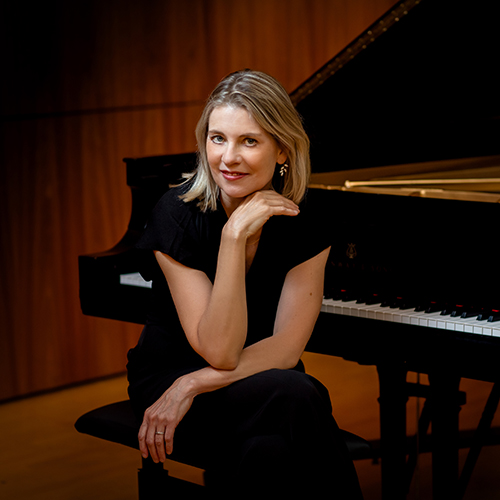
Elinor Freer is native of Montana and has built a versatile career as soloist, chamber musician, teacher, and artistic administrator. Praised for her “utmost sensitivity” (Harrisburg Patriot News) and “profound commitment and deep understanding” (General-Anzeiger, Bonn) Ms. Freer has performed throughout the U.S., Europe, Mexico, and China, including appearances in Amsterdam, Rotterdam, Bonn, Prague, Moscow, Beijing and Macao. A prizewinner and laureate in the Joanna Hodges International Piano Competition and the American Pianists Association Auditions, she has been the recipient of numerous awards including fellowships at the Steans Institute at Ravinia and the Tanglewood Music Center.Committed to expanding audiences for classical music, Dr. Freer founded residencies in rural Kansas and Montana, bringing music onto street corners and into schools, psychiatric hospitals, banks, and grocery stores.
For these projects she received grants from the NEA as well as state and local arts councils. In 2024 she created a series called ROC City Concerts which brings live music performed by Eastman School of Music students and faculty into underserved areas of Monroe County, performing at the local jail, juvenile detention center, substance abuse treatment facility, residence for un-housed veterans, and more. Dr. Freer is on the piano and chamber music faculty of the Eastman School of Music where she was awarded the 2025 Eisenhart Award for Excellence in Teaching.
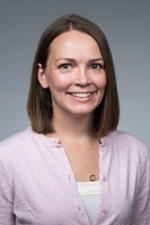
Alexis Stein is an Associate Professor of Instruction in the Biology Department. She received her PhD in molecular genetics from the University of Rochester in 2016 and was hired as a faculty member in 2017. Through her graduate career she led several upward bound summer outreach labs, introducing local area high school students to the world of molecular genetics. Prior to COVID, she co-taught a community engagement course in partnership with the Warner School that taught science literacy and communication to undergraduates, who then partnered with local high school biology classes to bring these topics to their classrooms. She has received Teaching Innovation and Student Course Development grants to expand and improve on the laboratory courses taught in the biology department. Her current teaching focuses on genetics, biochemistry and introductory biology courses. Most recently she has been rebuilding a first-year mentoring program to help students build the content and practical skills needed to succeed in a biology major.
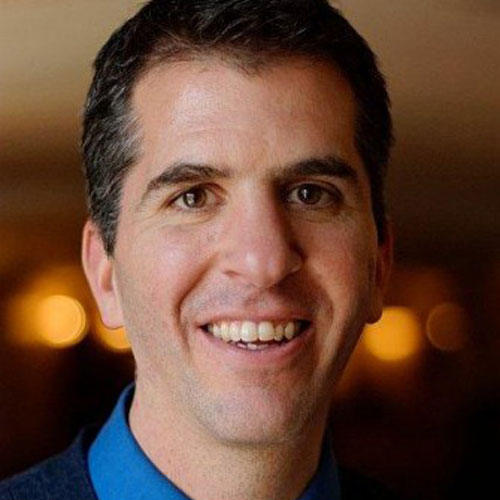
Glenn Mackin is the chair of the Humanities department and an Associate Professor of Political Science at Eastman, specializing in political theory. Since joining the faculty in 2007, his teaching and research have spanned democratic theory, the history of political thought, critical race and gender studies, poverty studies, and humanism. His current research focuses on the role of aesthetic practices and experiences in democratic politics. His previous work explored how those deemed incapable of social and political participation and how these designations are contested, most recently regarding U.S. debates on social welfare. In addition to his book, The Politics of Social Welfare in America, he has published articles in Res Philosophica, Political Theory, Philosophy & Rhetoric, New Political Science, and other journals. At Eastman, he has developed the Political Science curriculum and taught courses on democratic governance, power, poverty, and political thought, as well as Freshman Writing Seminars. He earned his PhD in 2005 from the University of Washington and has received awards for his teaching at Ohio University. He also studied at the Cornell School for Criticism and Theory in the summer of 2010.
Please contact cel@ur.rochester.edu with questions about the community-engaged courses.