
McNair Program Accepting Applications for New Cohort
The application window is still open for students interested in applying to the Ronald E. McNair Post-Baccalaureate Achievement program run by the David T. Kearns Center for Leadership and Student Success.
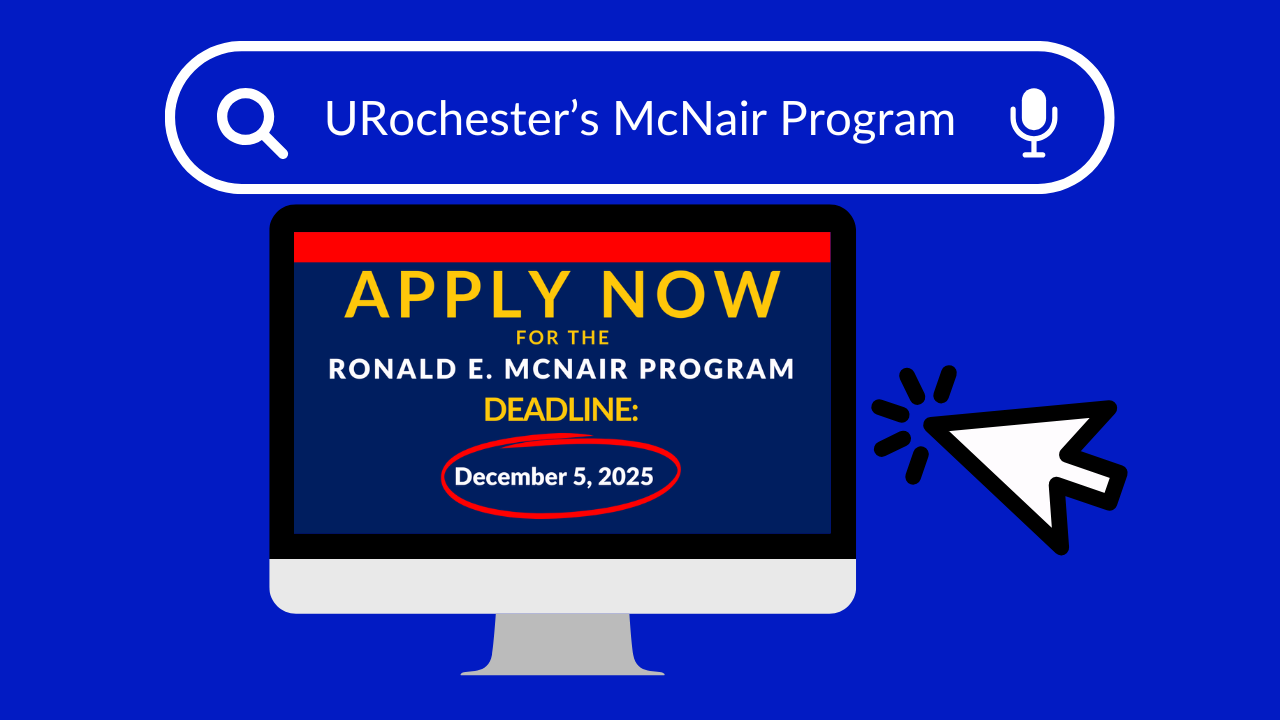
The application window will be open until December 5, 2025, with letters of recommendation due two weeks after that. Any undergraduate sophomore or junior who is interested in doing research with their sights set on getting a PhD after graduation, can apply for the program. McNair Program Manager George McCormick says there are 15 slots open for this years’ cohort and he hopes to have the slots filled by the end of January. According to McCormick, scholars who are admitted into the program can expect direct support from Day 1. “Immediately they'll receive an opportunity to be a paid researcher in their field. Over the long term they get training, instruction, advice, and support in how to become the best possible PhD applicant they can be.”
McCormick runs the McNair program with McNair Academic Advisor, Aaron Banks. Both have been longtime fixtures at the Kearns Center and have inducted dozens of students into the program over the years. “Students often ask how clear their research vision should be at this stage of interviewing for the program, and whether they should have a research question, or if we look down upon students who don't have a fully formed research question at this time,” says Banks. “We always emphasize that we prioritize curiosity over certainty. We look for students who are motivated and not discouraged by the setbacks they encounter as they take on a life of research.”
“We always emphasize that we prioritize curiosity over certainty. We look for students who are motivated and not discouraged by the setbacks they encounter as they take on a life of research.”
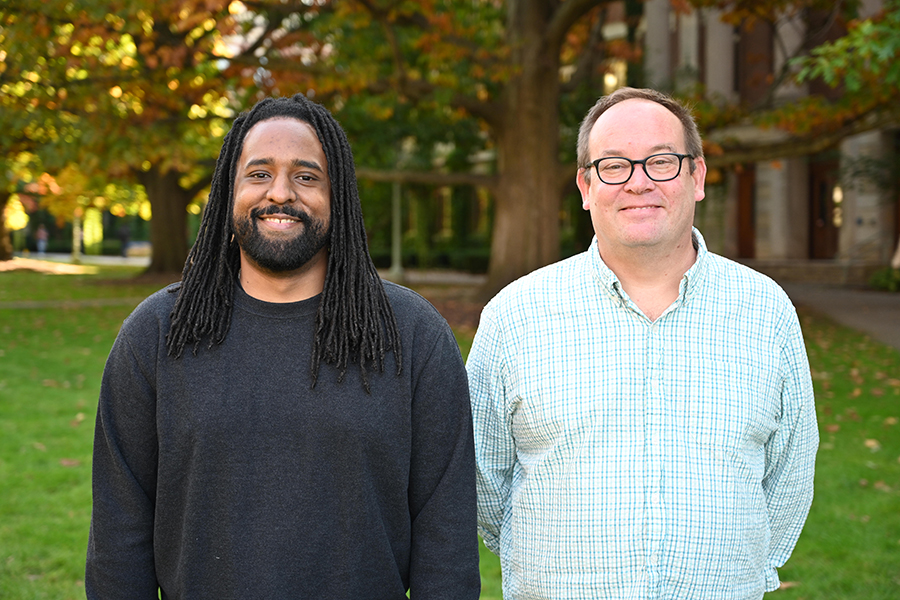
After students apply to the program they will be interviewed by McCormick and Banks and will have to submit a letter of recommendation as part of the application process. “What I've been finding interesting so far in this recruitment and application season is that we have a lot of strong juniors applying,” says Banks. “Although we aim to admit sophomores so they can have the full 2 1/2-year experience as McNair scholars, we welcome applications from sophomores and juniors, provided they are not planning to apply to medical or law school,” Banks says.
What is the McNair Program?
The McNair Program is a federally funded TRIO program aimed at helping first-generation and income-eligible students attain a PhD. The program has been continuously funded at the University of Rochester for decades, initially receiving funding in 1992. “On November 1st, the program celebrated 33 years at URochester,” says Assistant Director of College Programs, Melissa Raucci. “The entire Kearns Center was built from three staff members and the McNair program, it is truly our legacy, our foundation, our history that has allowed us to serve first-generation college students on a larger scale.” McCormick couldn’t agree more, saying the support that the program receives at the institutional level has contributed to its longevity. “URochester's McNair Program has a long and rich history. We are proud of that legacy. We are also the largest McNair Program in all of New York state, which means it hasn't just been the Kearns Center, but the support of URochester, that has made us so strong,” says McCormick.
“URochester's McNair Program has a long and rich history. We are proud of that legacy. We are also the largest McNair Program in all of New York state, which means it hasn't just been the Kearns Center, but the support of URochester, that has made us so strong.”
For prospective scholars, being a part of URochester’s McNair program means your network will reach far beyond the walls of the Kearns Center. “Having programs like this funded at the federal level, and at institutions across the country, creates a network, a community that scholars can leverage no matter where they take their next step,” Raucci explains. “McNair in particular is so vital because it is concerned about more than just retention and graduation; it seeks to change the face of the professoriate by creating a population of first-generation, income-eligible students who hold the highest degrees, doctoral degrees, PhD's in particular, in their discipline. It provides the highest level of support of any of our programs; faculty-mentored research experience, direct student research stipends, travel to conferences, and a curriculum of classes that prepare students for graduate school. In my mind, there is no other program like it,” says Raucci.

McNair Leaves Lasting Impacts
The impacts of McNair are broad and far reaching, but many current scholars point to three different areas where they feel the program has supported them the most. Research funding and opportunities to present that research, help with the graduate school process, and a space to make connections and friendships within a cohort.“I applied to McNair just because I really felt like I needed to find a sense of community and be around peers that had similar backgrounds to mine, while also receiving the support that I needed to prepare for the career I want,” says Najla Silmi, a senior studying brain and cognitive sciences at URochester.
“I applied to McNair just because I really felt like I needed to find a sense of community and be around peers that had similar backgrounds to mine, while also receiving the support that I needed to prepare for the career I want.”
“Before the McNair program I was definitely uncertain about how to go about applying to grad school. It was something that I knew I wanted to do – but being a first-generation college student I had no idea how path would be. The McNair program has really given me the confidence to apply, it has helped me put together my statements, prepare for interviews so I definitely feel a lot more confident about applying [to grad school] now,” Silmi says.

Research experience was a big difference maker for senior physics major, Marvin Calderon. “I’ve gained experiences through McNair that I wouldn’t have been able to get otherwise,” says Calderon. “Being able to have a fully funded summer means that more PIs are willing to take you on and give you a chance. And once they give you that chance you can show that you are worth it, and they might keep you on. I was able to get about two years of research experience here and that also enabled me to get a summer internship at a national lab which has boosted my total experience.”

Senior McNair scholar Guy Emrich says because of McNair he was able to dive deeper into his research on how 19th century American maps have erased Native presence in the Midwest. “One of the most major ways that McNair has been impactful for me is that funding is a huge deal - and so during my McNair summer I was able to go to Chicago. I was able to go on a funded research trip, which ultimately led to the completion of my first manuscript,” Emrich explains. Emrich adds that being in a cohort of people from a variety of different backgrounds is something that he also really appreciates. “Whether it’s coming from a low-income background, whether it’s being a minority within a particular field or whether it’s being first-generation. Being able to be in conversation and in contact with these people really creates strong friendships. And [being able to] help each other through these processes has been fantastic!”

The impact of the program is not only felt by the scholars who make up each cohort but by the Kearns staff who are deeply invested in the work. “I am grateful for, and inspired by, the fact that on a day-to-day basis I get to do work in a program that came out of the Civil Rights Movement. Being invited into that world is one of the great gifts of my life,” says McCormick. For Banks – the joy of doing this work comes through preparing students as they write the next chapters of their stories, knowing that the decisions they make now will impact them for years to come. “I find myself constantly telling George or our McNair scholars that what I enjoy most about what I do is the sense that so much is at stake, especially in that fall semester of their senior year,” says Banks. “The primary focus we take on when preparing McNair scholars for their graduate school journey is on how to write about their research and how that research is, in fact, authentically linked to their personal narrative. We have students writing constantly and writing by hand. A lot of these practices come from my background as a poet, and how, through this daily practice of writing, one learns to take one's ideas seriously. And as researchers, our scholars must do the same,” Banks says. He adds that both he and McCormick work with each scholar at their own pace and offer tailored support to fit their individual needs. “At the core of the program is the student; the student comes first, always.”
“At the core of the program is the student; the student comes first, always.”
It’s Not Too Late to Apply
For any student who is on the fence about applying, so many scholars say ‘just do it!’ “Earning a PhD as opposed to another kind of doctoral or professional degree, puts you at the top of your field educationally and allows you the most options and flexibility after graduation,” says Raucci. “Want to work in industry? Run your own lab? Teach at an R1 institution? Ascent into upper-level leadership at a University? A PhD will allow you to do any of those things!”
For those interested in applying, you can access the application online.